








Album Review: Dreams of a Sunflower River — Black Brunswicker
Album Review: Dreams of a Sunflower River — Black Brunswicker
Released April 24th, 2026
Ambient / Meditation
Introduction
There are albums that ask for your attention, and then there are albums that quietly dissolve the need for attention altogether. Dreams of a Sunflower River, the latest release from Manchester-based ambient folk artist Etta Helfrich, recording under the moniker Black Brunswicker, belongs firmly in the latter category. This is not music designed to overwhelm or dominate a room. Instead, it drifts gently into the listener’s consciousness like fog rolling across an open field at sunrise—subtle, meditative, deeply reflective, and profoundly calming.
Released via Nettwerk, Dreams of a Sunflower River is an ambient folk album steeped in memory, landscape, nostalgia, and atmosphere. It is the kind of record that feels less like a collection of songs and more like an emotional environment—one where tape hiss, drifting guitars, environmental textures, and soft reverberations become emotional language in and of themselves.
What makes the album especially compelling is the story behind it. Though released now, the material itself was originally recorded in 2019 and then shelved for six years before finally being revisited and brought into the light. As Helfrich herself explains, the album represents “the creative idea gathering of an artist at the dawn of their career,” consisting of forgotten works rediscovered with fresh perspective. That context adds an unmistakable emotional weight to the listening experience. These tracks do not feel manufactured or trend-conscious—they feel unearthed, preserved like faded photographs rediscovered in an attic box.
The title itself, Dreams of a Sunflower River, perfectly captures the atmosphere within. The album references the Mississippi tributary tied closely to Delta blues history, and throughout the record there is a humid, drifting quality that evokes the “heat and haziness” of the American South. Yet despite its geographical references, this album feels untethered to any one place. It exists somewhere between the Midwest, the English countryside, and an imagined dreamscape built entirely from memory and emotion.
Across ten tracks, Helfrich blends peaceful ambient textures, post-rock spaciousness, and American primitive fingerstyle guitar into something remarkably cohesive. The influence of legendary guitarist John Fahey looms gently throughout the album, particularly in Helfrich’s use of fingerpicked acoustic guitar and meditative pacing. In fact, Helfrich had only recently begun experimenting with Fahey’s beloved fingerstyle approach while writing these pieces, resulting in music that naturally conjures mist-covered mountains, endless cornfields, and lonely rural highways.
One of the album’s standout moments arrives with “A Raga Called John,” a direct tribute to Fahey that also nods toward the drone-rock explorations of Pelt’s Ayahuasca. The track unfolds slowly, gracefully, almost ceremonially. Acoustic guitar motifs circle and evolve while subtle environmental sounds—most notably the soft trickling of water—create the sensation of standing beside a riverbank at dusk. It is deeply meditative music, the kind of piece that encourages stillness rather than distraction.
That environmental quality continues beautifully on “By the River,” which Helfrich describes as intentionally designed to “ebb and flow in a way meant to evoke a soft-running river.” The track perfectly embodies the album’s philosophy: movement without urgency. Nothing feels forced. Every note seems allowed to breathe naturally, drifting in and out like passing thoughts during meditation.
In many ways, this is what makes Dreams of a Sunflower River such an effective album for meditation and introspection. Modern ambient music often risks becoming sterile or overly digital, but Helfrich’s reliance on tape machines, analogue warmth, and physical recording techniques gives the album a living, breathing quality. Tape hiss becomes texture. Reverb becomes memory. Delay trails become emotional residue.
Helfrich herself describes tape recording as “a living way of recording … more organic and alive than just recording digitally.” That philosophy is audible throughout the album. There is decay here—not in a negative sense, but in the beautiful way old photographs fade or memories soften over time. The imperfections are part of the emotional experience. The faint hiss layered beneath the guitars creates what Helfrich calls an “almost spectral-like quality,” imparting mood without explicitly stating it.
This ghostly warmth becomes especially powerful on tracks like “I’ve Got Something to Share,” where layers of drone, delay, and subdued guitar tones create a fragile emotional intimacy. Described by Helfrich as “a song for the introverts,” the piece feels like internal dialogue translated into sound.
Similarly, “When My Memory Starts to Fade” explores the emotional terrain of people gradually drifting apart as they evolve into different versions of themselves. The track doesn’t dramatize heartbreak; instead, it reflects on it quietly, almost philosophically. The restraint here is crucial. Rather than demanding emotional reaction, the music allows the listener to bring their own experiences into the space.
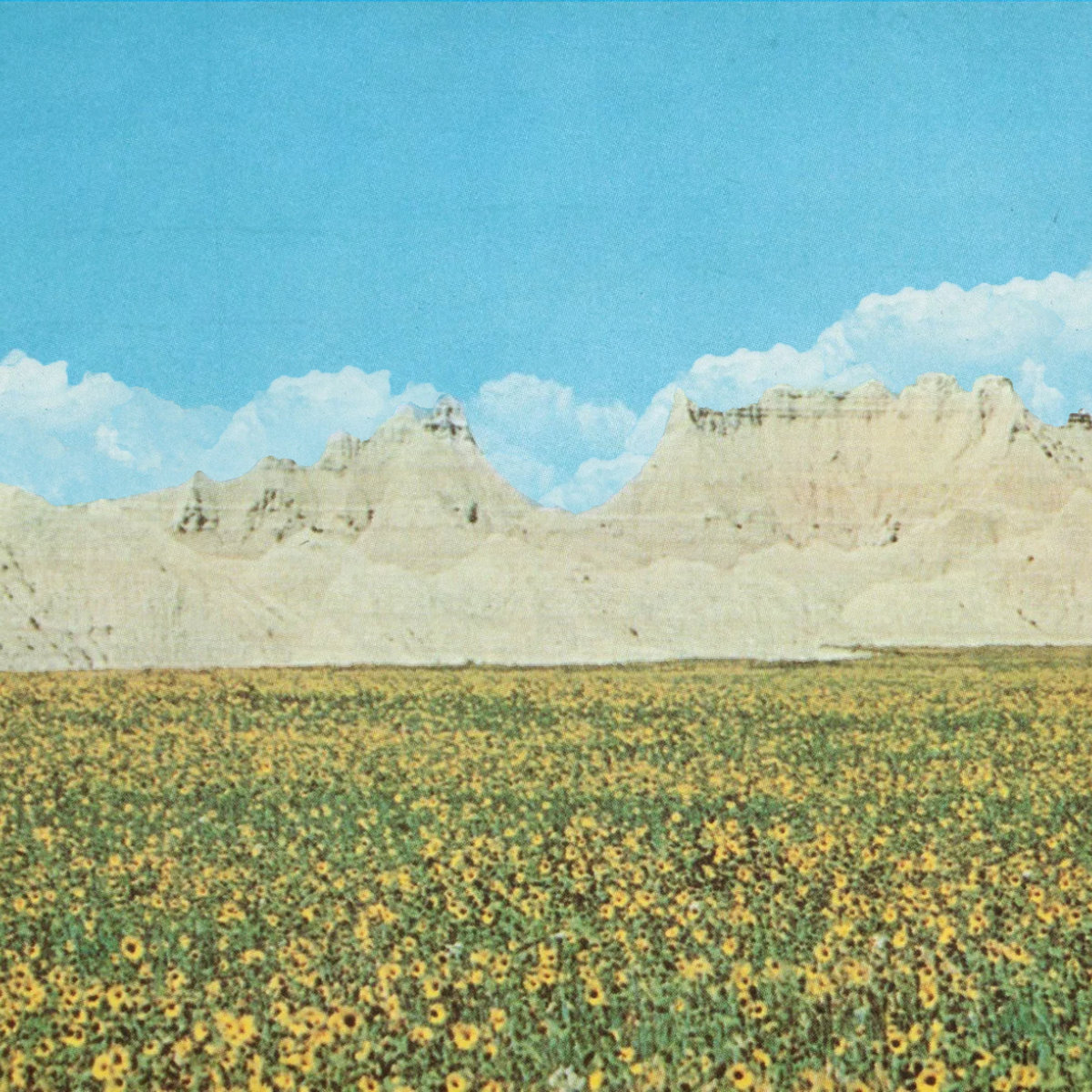
The album’s visual imagery is equally important to its identity. The cover art depicts a sea of sunflowers beneath icy mountains, reinforcing the album’s tension between warmth and distance, memory and isolation. Helfrich’s multidisciplinary approach extends into the accompanying Concert for a Live Stream visual project, where manipulated tape loops and Peak District landscapes mirror the album’s themes of environmental immersion and sonic decay.
Perhaps the most remarkable aspect of Dreams of a Sunflower River is how effortlessly it creates emotional stillness. In a world dominated by overstimulation, constant noise, and algorithmic urgency, this album feels radically patient. It asks nothing from the listener except presence.
This is music for:
- quiet mornings
- reflective evenings
- long walks through nature
- meditation sessions
- rainy window views
- solitary moments of introspection
It is deeply calming without becoming emotionally empty. There is melancholy here, but also comfort. Nostalgia, but not bitterness. Isolation, but not loneliness.
Ultimately, Dreams of a Sunflower River succeeds because it understands that ambient music is not merely about atmosphere—it is about emotional space. Black Brunswicker has created an album that feels alive with memory, texture, and humanity, transforming tape hiss, drifting guitar lines, and environmental ambience into something quietly transcendent.
It is not simply an album to hear.
It is an album to inhabit.
You can listen and buy the album here, on Bandcamp:
https://blackbrunswicker.bandcamp.com/album/dreams-of-a-sunflower-river