


Album Review: All I Can Do — Simon D ft. Fliss
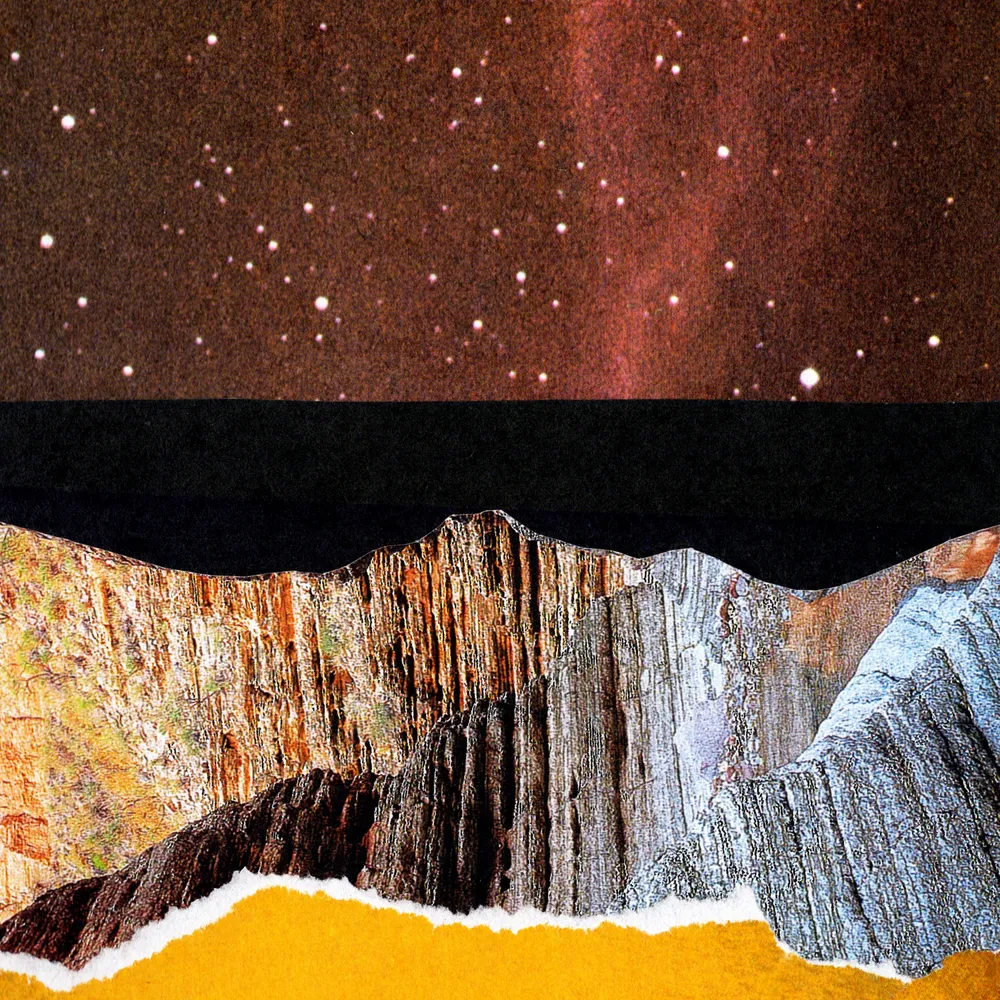
Album Review: All I Can Do — Simon D ft. Fliss
Released October 27, 2026
Electronic / Electro-pop
Where Nature, Electronic Music, and the Cosmos Come Together
Where Nature, Electronic Music, and the Cosmos Come Together
There is something particularly magical about electronic music that manages to feel completely organic. It’s an interesting contradiction when you think about it. Synthesizers, drum machines, sequencers, and digital production tools are designed to create and manipulate sound electronically, yet in the right hands, those same instruments can produce music that feels as natural as a gentle breeze passing through the trees or waves rolling onto a deserted beach.
Australian electronic duo Simon D ft. Fliss has captured that fascinating relationship beautifully on All I Can Do, a six-track EP that effortlessly combines electronic dance music, live instrumentation, psychedelic experimentation, and the sounds of the natural world into a wonderfully immersive listening experience.
Released October 27, 2026, through Home Hearing Records, All I Can Do is more than another electronic release. It represents the continuing evolution of a musical partnership between two longtime friends, Simon Denis and Felicity Moran, whose shared history stretches all the way back to their school days.
What began as casual backyard music sessions has gradually transformed into a genuine creative collaboration, with Fliss bringing her considerable instrumental talents into Simon’s electronic universe. The result is music that feels remarkably spontaneous, warm, and full of personality.
And perhaps most importantly, it’s simply beautiful to listen to.
Simon D is certainly no newcomer to electronic music. With more than three decades of experience as a producer, DJ, and live performer, he has developed an impressive musical résumé. His career includes being a founding member of Brisbane dance pioneers D-Ko, performing internationally with Bri & Si, and sharing stages with artists associated with everything from alternative rock to electronic dance music.
His independent label, Home Hearing Records, established in 2024, has also become an outlet for his continued musical exploration.
In a September 2025 interview with Electrofans, Simon described his creative approach as a mixture of influences, discussing his interest in synthpop, synthwave, experimental electronica, psychedelic grooves, and dub techno. He also explained how his home-studio production process, primarily using Ableton alongside other instruments and software, allows his compositions to evolve naturally over time.
That philosophy is immediately recognizable on All I Can Do.
Rather than committing to one particular electronic subgenre, the EP moves freely between downtempo, house, garage, psychedelic electro, and dub-inspired textures. The compositions are connected not by a rigid formula but by a shared atmosphere of curiosity, exploration, and genuine musical enjoyment.
Fliss plays a particularly important role in making that atmosphere possible.
An accomplished conductor, composer, educator, and multi-instrumentalist, she contributes flute to three of the EP’s tracks and saxophone to another. These aren’t simply decorative additions placed over electronic backing tracks. They introduce a human dimension that helps distinguish the music from conventional programmed dance productions.
The opening title track, “All I Can Do,” establishes that relationship immediately.
There is an inviting warmth to the combination of electronic rhythms and Fliss’s flute, creating a soundscape that feels equally suited to a relaxed afternoon outdoors or a late-night listening session with headphones. The track introduces the EP’s central musical idea: electronic instruments and acoustic performance don’t have to compete for attention. They can complement one another beautifully.
The title itself also carries personal significance for Simon, making it an appropriate starting point for a record that documents the duo’s continuing musical journey.
What makes the composition especially appealing is its sense of movement. The electronic foundation provides a comfortable rhythmic pulse while the live instrumentation brings an expressive quality to the arrangement. It feels relaxed without becoming passive, and danceable without demanding that the listener immediately get up and move.
That balance becomes one of the EP’s defining strengths.
“Birds” continues the journey, bringing the relationship between nature and electronic music into sharper focus.
The use of natural sounds alongside synthesizers and electronic recordings creates a wonderfully atmospheric experience. Fliss’s flute is particularly appropriate here, as its breath-driven character feels perfectly at home within a composition inspired by the natural world.
There is something almost meditative about the concept of blending organic environmental sounds with electronically generated textures. Rather than presenting nature and technology as opposing forces, Simon and Fliss allow them to coexist.
The result suggests a musical landscape in which the natural world is not merely an inspiration but an active participant.
It’s easy to imagine listening to this piece while sitting outside on a quiet morning, watching the world slowly come to life. Yet the electronic production gives it enough rhythmic identity to remain firmly connected to the dance-music traditions that have shaped Simon’s career.
The wonderfully titled “The Tentacles of Ozric” introduces another dimension to the duo’s musical personality.
The title immediately brings to mind the adventurous spirit of psychedelic electronic music, and the composition’s combination of electronic experimentation and live flute makes it particularly interesting.
There is a playful sense of exploration surrounding this track, as though the musicians are deliberately allowing their ideas to wander beyond conventional arrangements.
For listeners familiar with the psychedelic electronic tradition associated with groups such as Ozric Tentacles, the title itself offers an intriguing point of reference. The track fits comfortably within a broader musical world where synthesizers, progressive experimentation, and improvisational instincts are allowed to interact.
This is also where Simon’s experience as a live performer becomes especially important.
Electronic music sometimes suffers from the misconception that everything must be meticulously programmed and repeated. Yet the most engaging electronic compositions often contain an element of unpredictability, whether through evolving synthesizer textures, rhythmic variation, or the interaction between musicians.
All I Can Do embraces that unpredictability.
The fourth track, “Change,” provides an interesting shift in the EP’s progression.
Without Fliss’s flute or saxophone among its credited instruments, the focus moves more directly toward Simon’s electronic production. It offers an opportunity to appreciate the rhythmic and textural foundations supporting the rest of the release.
Its comparatively short runtime also makes it an effective transition between the more organically influenced opening compositions and the dub-oriented material that follows.
The title feels particularly appropriate considering the circumstances surrounding the EP. Three of its compositions originated in material previously released on Simon’s 2025 EP Every Day Is Some Day, but have since evolved through continued live performances and collaboration.
Simon has explained that the addition of Fliss brought changes he considered significant enough to justify recording updated versions.
That is an important creative decision.
Rather than treating recorded music as something permanently finished, the duo recognizes that songs can continue growing as the musicians themselves evolve.
Sometimes the most exciting version of a composition isn’t the first one released.
Sometimes it takes another musician, another performance, or simply more time to discover what the music can become.
“Dub in G Minor 2026” is a particularly enjoyable example of the EP’s stylistic diversity.
Here, Fliss exchanges her flute for the saxophone, introducing a different tonal personality to the music.
Saxophone and dub-influenced electronic production make a fascinating combination. The instrument’s expressive qualities can bring a soulful, almost jazz-like character to electronic rhythms, while the spacious production traditions associated with dub allow individual sounds to occupy their own atmospheric territory.
The title’s inclusion of 2026 reinforces the idea of musical evolution, suggesting a composition being revisited and reshaped for the present.
There is something wonderfully appealing about electronic music that isn’t afraid to incorporate instruments traditionally associated with entirely different genres. The saxophone adds another dimension of warmth and personality, reinforcing the sense that Simon and Fliss are interested in making music rather than simply satisfying genre expectations.
And then comes the closing track.
“The 4th Dimension.”
For me, this is where the EP’s broader artistic concept becomes especially fascinating.
Featuring voice clips from legendary astronomer and science communicator Carl Sagan, the final composition introduces a cosmic perspective to a record that has already explored the relationship between natural sounds, electronic textures, and human expression.
It’s a brilliant thematic direction.
Throughout his career, Sagan encouraged people to recognize the extraordinary beauty and scale of the universe. His ability to communicate complex scientific ideas with warmth, wonder, and philosophical depth made his voice uniquely suited to music concerned with exploration and discovery.
Placing that voice within an electronic composition creates a connection between two forms of curiosity: the scientific desire to understand the universe and the artistic desire to experience it.
Suddenly, the EP’s journey feels much larger.
We began with music that brought to mind the natural environment around us. We encountered birds, organic instrumentation, psychedelic textures, and evolving electronic rhythms.
Now we’re looking outward toward the cosmos.
It’s a beautiful progression.
The spoken-word element also gives the closing track a different personality from the preceding compositions. Rather than relying entirely on instrumental expression, the music incorporates a recognizable human voice associated with our fascination with space, existence, and the mysteries surrounding us.
There is something deeply moving about that combination.
Electronic music has always been particularly effective at evoking images of space and the unknown. Synthesizers can create enormous atmospheric environments, while rhythmic sequences suggest motion through imaginary landscapes.
Combined with Sagan’s voice, those qualities take on an additional emotional dimension.
The music becomes an invitation to contemplate something beyond our immediate surroundings.
And what better way to conclude a record that celebrates exploration?
Interestingly, an October 29 review from Electrofans described All I Can Do as a miniature musical adventure, praising the distinct personalities of its six compositions and identifying influences ranging from chillout and trip-hop to organic house, deep house, ambient, and synthwave.
That description captures something essential about this release.
It’s difficult to place All I Can Do inside one musical category because it doesn’t really belong to just one.
There are moments for dancing, moments for reflection, and moments when the music seems designed simply to accompany your thoughts.
Fliss herself described the EP as something listeners could enjoy while relaxing or dancing, and that is an accurate summary of its appeal.
You could easily imagine these tracks playing during an intimate outdoor electronic music gathering, with people moving gently to the rhythms as the sun begins disappearing below the horizon.
Equally, the EP works beautifully as a private headphone experience.
The production has enough atmosphere and musical detail to reward attentive listening, while its grooves remain accessible and inviting.
Another aspect worth celebrating is the friendship at the heart of the project.
In an industry frequently driven by commercial expectations, streaming statistics, and the pressure to produce the next release, there is something refreshing about two longtime friends rediscovering their creative connection through music.
Their collaboration feels like an extension of a genuine relationship rather than a calculated artistic partnership.
And that sense of enjoyment is reflected in the record’s personality.
All I Can Do doesn’t sound like music desperately trying to impress the listener.
It sounds like music made by people who genuinely love creating it.
The combination of Simon’s electronic production experience and Fliss’s instrumental background produces a sound that is simultaneously sophisticated and approachable. The arrangements demonstrate musical knowledge without becoming unnecessarily complicated, and the diversity of styles keeps the listening experience interesting from beginning to end.
There is also a refreshing absence of pretension.
The EP is comfortable being playful, atmospheric, psychedelic, rhythmic, and contemplative, sometimes within the same musical journey.
That confidence comes from experience.
Simon D has spent decades exploring electronic music, and Fliss brings her own extensive musical background to the collaboration. Together, they have created something that feels less concerned with following contemporary trends than with discovering where their combined musical instincts might lead.
And that’s precisely why All I Can Do works so well.
It’s a record about movement.
Movement between genres.
Movement between electronic and acoustic instruments.
Movement between nature and technology.
Movement between old friendships and new creative possibilities.
And ultimately, movement between the familiar world around us and the extraordinary universe beyond it.
With six beautifully varied compositions, All I Can Do offers an engaging blend of electronic dance music, natural atmosphere, live instrumentation, and psychedelic imagination. Simon D and Fliss have created a release that feels equally at home on the dance floor, in a quiet listening room, or beneath a sky filled with stars.
It’s warm, adventurous, wonderfully relaxed, and filled with genuine musical character.
Sometimes the most rewarding musical journeys don’t require a destination.
They simply require curiosity, an open mind, and a willingness to follow the sounds wherever they lead.
From birdsong to the cosmos, All I Can Do reminds us that music, nature, and the universe are all connected by one extraordinary thing: the beauty of discovery.
You can listen to the album here, on Bandcamp:
https://simondenis.bandcamp.com/album/all-i-can-do